
WALK-IN EAR INFECTION TREATMENT IN CARMEL
Ear Infection Treatment — Walk-In, Same-Day Relief
Ear pain that won’t wait for a primary care appointment shouldn’t have to. Walk into Monarch Medicine for physician evaluation, on-site diagnosis, and same-day treatment for adults and children.
Evaluated and treated by a Monarch physician — led by Dr. Lisa Clay, MD — and licensed clinical staff | Walk-ins welcome 7 days a week

Adults & Children
We treat ear infections in patients of all ages
Walk-In Friendly
No appointment needed — open 7 days a week
Physician Diagnosis
A Monarch physician examines your ear with an otoscope and determines the right treatment.
Insurance Accepted
Most major plans accepted + affordable self-pay rates
TYPES OF EAR INFECTIONS
Understanding Your Ear Infection
Not all ear infections are the same. A Monarch physician performs a thorough examination to identify the type and location of infection, which determines the right treatment approach.
Middle Ear Infection
Otitis Media — Most Common in Children
Fluid and infection behind the eardrum, often following a cold or upper respiratory infection. Causes ear pain, pressure, fever, and sometimes temporary hearing changes. Most common in children ages 6 months to 3 years. Treatment may include antibiotics, pain management, or watchful waiting depending on severity and age.
Symptoms: Ear pain, fever, irritability (in children), pulling at ears, difficulty sleeping
Outer Ear Infection
Otitis Externa — Swimmer’s Ear
Infection of the ear canal, commonly caused by water exposure, cotton swab use, or skin conditions. Causes pain that worsens when pulling the outer ear, swelling, drainage, and sometimes temporary hearing reduction. Treatment typically includes antibiotic ear drops and keeping the ear dry.
Symptoms: Pain when touching or pulling ear, ear canal swelling, drainage, itching
Recurrent Ear Infections
When Ear Infections Keep Coming Back
Some patients — especially children — experience three or more ear infections within six months or four within a year. A Monarch physician evaluates recurrent cases, provides acute treatment, and can refer to an ENT specialist when surgical intervention like ear tubes may be appropriate.
When to come in: 3+ infections in 6 months, persistent fluid, hearing concerns

PHYSICIAN-LED DIAGNOSIS
Why a Physician Evaluation Matters for Ear Infections
Ear infections are one of the most common reasons for urgent care visits — and one of the most commonly mismanaged. Overprescribing antibiotics for viral ear infections contributes to antibiotic resistance, while undertreating bacterial infections leads to complications like eardrum perforation or chronic fluid buildup.
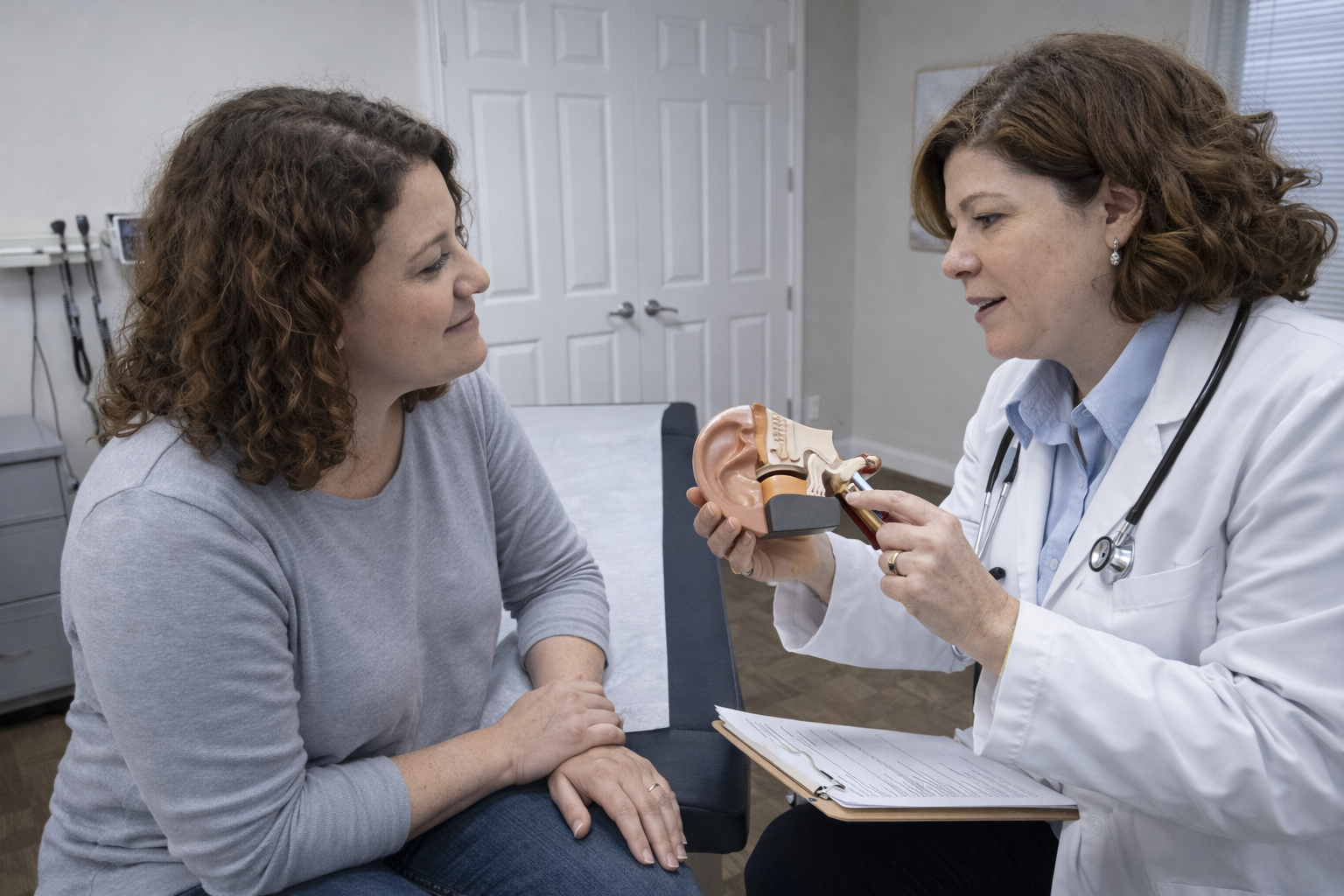
At Monarch Medicine, a physician examines each patient with an otoscope to visually assess the eardrum, identify the type of infection, and determine whether antibiotics are truly indicated. For children, we follow current AAP (American Academy of Pediatrics) guidelines for age-appropriate treatment decisions.
"Parents want relief for their child, and I understand that urgency. But prescribing antibiotics when they aren’t needed doesn’t help — it creates future problems. I take the time to explain what I’m seeing and why I’m recommending the treatment plan I choose." — Dr. Lisa Clay, MD, Owner & Medical Director
WHEN TO VISIT
When to Bring Your Child (or Yourself) In
Not every earache needs a doctor visit, but some do. Visit Monarch Medicine if you or your child has:
- ✓ Ear pain lasting more than 24 hours
- ✓ Fever with ear pain
- ✓ Drainage or fluid coming from the ear
- ✓ Ear pain following a cold or respiratory infection
- ✓ Ear pain after swimming or water exposure
- ✓ Hearing changes or muffled hearing
- ✓ An infant or toddler who is pulling at their ears and irritable
- ✓ Recurrent infections (3+ in 6 months)
Young infants with fever: If your baby is 3 months old or younger and has a rectal temperature of 100.4°F (38°C) or higher, call your pediatrician immediately—even if you suspect an ear infection. Do not wait for other symptoms or assume the fever is only from the ear.
Parents: Children under 6 months with a suspected ear infection should be evaluated promptly by a physician. Learn about our pediatric care →
WHAT TO EXPECT
Your Visit in 4 Simple Steps
1
Walk In or Check In Online
No appointment needed. Bring your child in during open hours or save time by checking in through MyChart.
2
Otoscope Examination
A Monarch physician examines the ear canal and eardrum using an otoscope to identify the type and severity of infection.
3
Diagnosis & Treatment Plan
Based on the examination, a Monarch physician recommends the appropriate treatment — antibiotics, ear drops, pain management, or watchful waiting with clear follow-up instructions.
4
Prescriptions & Follow-Up
Prescriptions sent to your pharmacy before you leave. We provide aftercare instructions and a clear plan for when to return if symptoms don’t improve.
Every visit is physician-led at our walk-in urgent care in Carmel — meet Dr. Lisa Clay, MD, founder and medical director.
INSURANCE & PRICING
Accepted Insurance & Self-Pay Options
Monarch Medicine accepts most major insurance plans for ear infection visits. We also offer transparent self-pay pricing for patients without insurance.
Insurance Plans Accepted:
Anthem Blue Cross Blue Shield, Aetna, UnitedHealthcare, Cigna, and most other major carriers. We are not in network with Medicaid or Humana. Not sure if we accept your plan? Call us at (317) 804-4203.
No Insurance? No Problem.
We offer affordable self-pay rates with clear in-office pricing. Visit our self-pay pricing page for current rates.

FREQUENTLY ASKED QUESTIONS
Ear Infection FAQ
How do I know if my child has an ear infection?
Common signs include pulling or tugging at the ear, irritability, difficulty sleeping, fever, and reduced appetite. Older children may complain of ear pain directly. If you notice drainage from the ear, that’s a strong indicator to come in for evaluation.
Do all ear infections need antibiotics?
No. Many ear infections — especially in children over 2 with mild symptoms — resolve on their own within 48–72 hours. We follow current AAP guidelines, and a Monarch physician may recommend watchful waiting with pain management rather than immediate antibiotics, depending on the child’s age, symptom severity, and exam findings.
Can adults get ear infections?
Yes. While ear infections are more common in children, adults can develop both middle ear infections (often after a cold) and outer ear infections (swimmer’s ear). We treat adults and children for all types of ear infections.
What is swimmer’s ear?
Swimmer’s ear (otitis externa) is an infection of the outer ear canal, usually caused by water that stays in the ear after swimming or bathing. It’s also common from cotton swab use. Treatment typically involves antibiotic ear drops and keeping the ear dry.
My child keeps getting ear infections. What should I do?
If your child has 3 or more ear infections in 6 months, or 4 in a year, a Monarch physician can evaluate for underlying factors and discuss whether a referral to an ENT specialist for ear tubes is appropriate. Walk in for any acute episode — we’ll treat the current infection and help you plan for the pattern.
Do you accept insurance for ear infection visits?
Yes. We accept most major insurance plans including Anthem, Aetna, UnitedHealthcare, and Cigna. We are not in network with Medicaid or Humana. We also offer affordable self-pay pricing.
Ear infection treatment at Monarch Medicine is provided for evaluation, diagnosis, and management. This page is for informational purposes and does not constitute medical advice. Patients with severe symptoms including high fever, significant hearing loss, or facial swelling should seek immediate medical evaluation. All treatment is provided by licensed clinical staff under physician supervision.
PATIENT REVIEWS
What Our Patients Say
★★★★★
"The staff were incredibly friendly, attentive, and genuinely caring when I brought my daughter in. They created a welcoming environment with coffee, water, and snacks in the waiting area, which was a thoughtful touch. I also really appreciated their clear in-office pricing. They bill insurance but also offer very reasonable cash-pay options, which provides peace of mind compared to the unpredictable costs of an ER visit. Most importantly, the experience felt personal rather than rushed. Highly recommend if you’re looking for compassionate, patient-centered care."
—Brittany Carter
★★★★★
"Dr. Clay is great, always nice and makes sure I’m up to date on any questions I may have. Nurse Olivia is always happy and smiling. It’s a great place!!!"
—Greg Newcomb
★★★★★
"Going to this Urgent Care is like visiting my own doctor…not your typical urgent care facility. This is my second visit in less than a year upon someone’s recommendation. Virtually no wait and Dr Clay really listened and got to the root of my problem. Highly recommend!"
— Robin DeLuca
MEDICALLY REVIEWED
This page was medically reviewed by Dr. Lisa Clay, MD — board-certified physician, owner and medical director of Monarch Medicine Urgent Care in Carmel, Indiana. Last reviewed: March 2026.
Ear Pain? Walk In Today.
Physician diagnosis, same-day treatment, prescriptions before you leave. No appointment needed.
Mon–Fri 8am–6pm · Sat–Sun 9am–12pm
Ear infection treatment at Monarch Medicine is provided for evaluation, diagnosis, and management. This page is for informational purposes and does not constitute medical advice. Patients with severe symptoms including high fever, significant hearing loss, or facial swelling should seek immediate medical evaluation. All treatment is provided by licensed clinical staff under physician supervision.